
The Urgent Threat of Candida auris
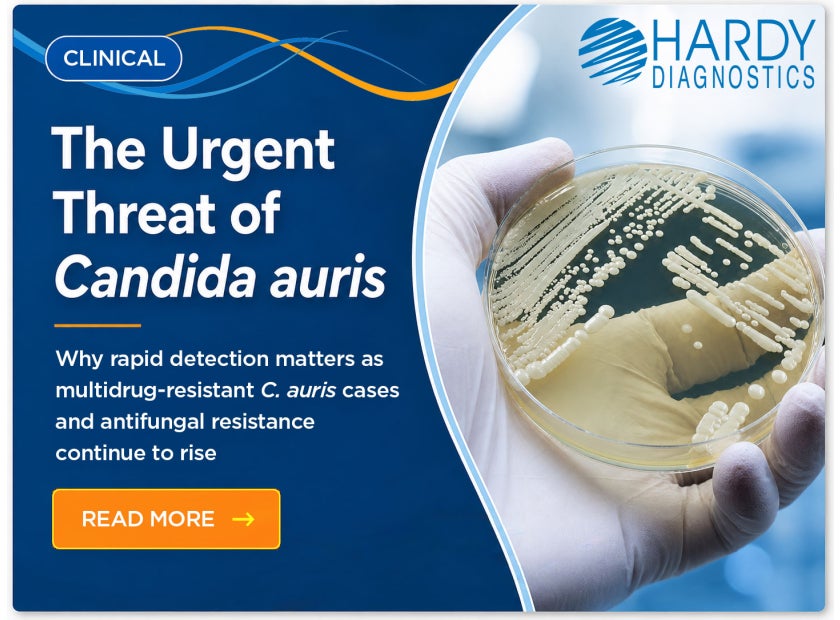
The rise of clinical candidiasis cases in the U.S. caused by Candida auris in the last decade has earned this organism a top spot in the World Health Organization’s Priority Pathogen List, placing it in the Critical Priority Group alongside Candida albicans, Cryptococcus neoformans, and Aspergillus fumigatus.1 Additionally, the Centers for Disease Control and Prevention (CDC) named drug-resistant C. auris as an antimicrobial resistance threat and began to sound the alarm as early as 2016.2 This yeast’s ability to resist multiple commonly used antifungal drugs makes it particularly difficult to treat and of great concern in healthcare settings, where it can easily spread and is associated with mortality rates of up to 72%.3
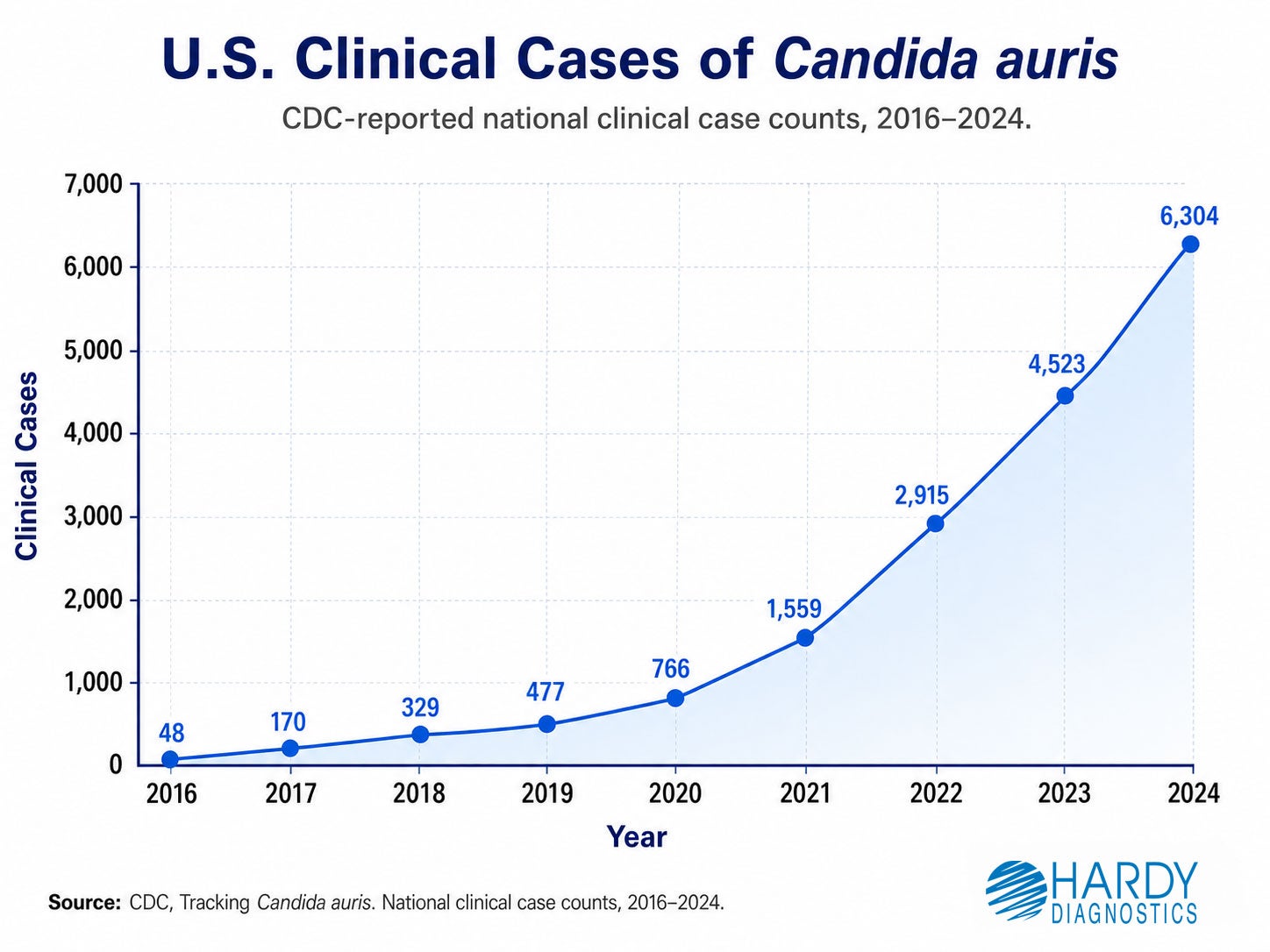
In 2021, reports indicated a tripling in C. auris cases with resistance to echinocandins.2 According to 2018 CDC data, approximately 90% of C. auris isolates were resistant to at least one antifungal, and about 30% were resistant to two or more classes.4 Following initial reporting of 51 clinical C. auris cases in 2016, the CDC is now reporting over 7,000 cases in 2025.5 Therefore, the need for accurate and rapid detection methods are of great importance so that effective treatment regimens can be implemented as quickly as possible for improved patient outcomes, the prevention of further antifungal resistance, and to effectively mitigate further spread.
The Threat Is No Longer Theoretical
Why It Matters: Key Facts

Multidrug-resistant yeast that can be resistant to multiple classes of antifungals

Mortality rates of up to 72% in cases of invasive infections

90% of clinical isolates are resistant to at least one antifungal agent

Rapidly spreads in healthcare settings and persists in the environment
Rapid Detection Makes a Difference
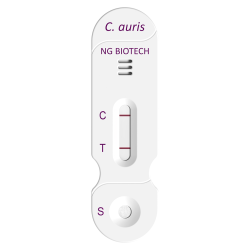
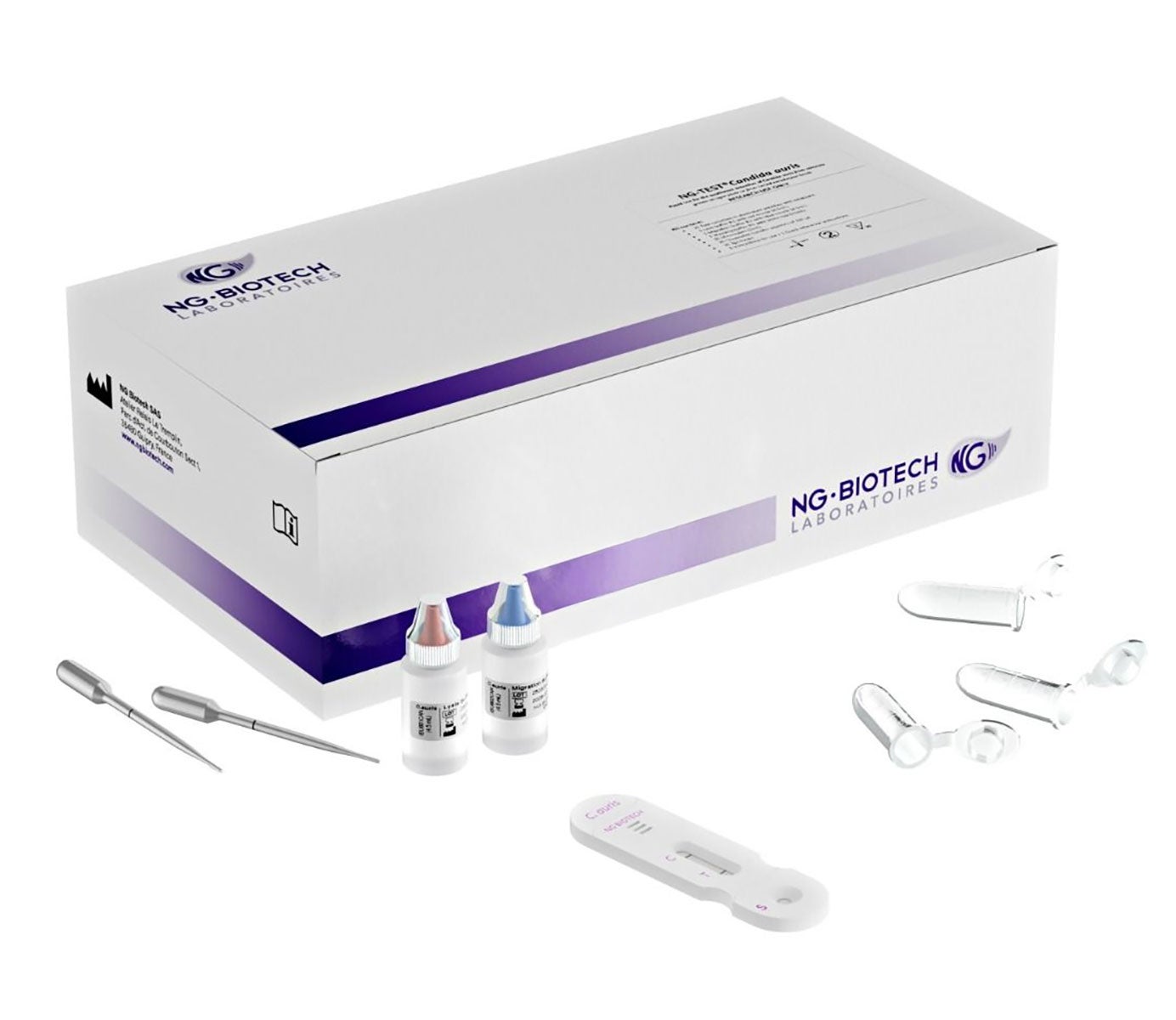
NG-TEST® Candida auris is an in vitro rapid and visual immunochromatographic assay for the detection of C. auris when cultured on agar media. On December 30th 2025, the FDA granted Breakthrough Device Designation to NG Biotech’s NG-TEST® Candida auris, in partnership with Hardy Diagnostics.
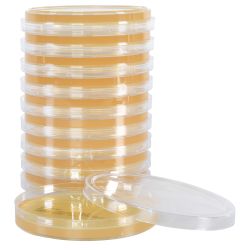
This device has demonstrated high positive percent agreement (PPA) and negative percent agreement (NPA) for the detection of C. auris directly from pure colonies across six global clades. NG Biotech’s NG-TEST® Candida auris is intended for use with yeast colonies cultured on Sabouraud Dextrose (SabDex) agar and HardyCHROM™ Candida + auris agar in 15 minutes and requires no additional equipment.3
NG-TEST® Candida auris offers a low-cost alternative compared to more expensive methods. While molecular techniques or matrix-assisted laser desorption ionization time-of-flight (MALDI-ToF) mass spectrometry are also rapid for detecting C. auris, the high cost of instrumentation can limit their use in some clinical settings.3
The most effective way to manage multidrug resistant C. auris is through early detection, followed by prompt, accurate, and effective treatment. NG-TEST® Candida auris lateral flow supports this need by providing accurate, rapid, and easy-to-read results that support timely clinical decisions and infection control efforts.
The NG-TEST® Candida auris is now available in the United States for Research Use Only (RUO) while 510(k) clearance is in progress.
NG-TEST® Candida auris
FDA Breakthrough Device Designation
On December 30, 2025, the FDA granted Breakthrough Device Designation to NG-TEST® Candida auris.
Availability in the U.S. is RUO while 510(k) clearance is in progress.
Sources:
World Health Organization. WHO fungal priority pathogens list to guide research, development and public health action. Geneva: WHO; 2022. Available from: https://iris.who.int/server/api/core/bitstreams/69af4379-4f27-4ac4-8973-74d7b52af7bd/content
- Centers for Disease Control and Prevention (CDC). Increasing threat of spread of antimicrobial-resistant fungus in healthcare facilities. Press Release. March 20, 2023. Available from: https://www.cdc.gov/media/releases/2023/p0320-cauris.html
- Chalin A, Arvor A, Hervault AS, et al. A lateral flow immunoassay for the rapid identification of Candida auris from isolates or directly from surveillance enrichment broths. Front Microbiol. 2024;15:1439273. doi:10.3389/fmicb.2024.1439273 https://www.frontiersin.org/journals/microbiology/articles/10.3389/fmicb.2024.1439273/full
Centers for Disease Control and Prevention (CDC). Antibiotic Resistance Threats in the United States, 2019. Atlanta, GA: U.S. Department of Health and Human Services; 2019. Available from: https://www.cdc.gov/antimicrobial-resistance/media/pdfs/2019-ar-threats-report-508.pdf
Biran R, Cohen R, Finn T, et al. Nationwide outbreak of Candida auris infections driven by COVID-19 hospitalizations, Israel, 2021–2022. Emerg Infect Dis. 2023;29(7):1302–1311. Available from: https://stacks.cdc.gov/view/cdc/130808
Meet the author

TECHNICAL SERVICES INSTRUMENTATION SPECIALIST I at HARDY DIAGNOSTICS
Gavin Schroter
Gavin joined the team in 2025, where he provides scientific and technical support for instrumentation products, including customer inquiries, complaint investigations, and technical documentation. His responsibilites include ensuring regulatory compliance (FDA/ISO), performing lab-based troubleshooting, and collaborating across teams to improve product quality, customer satisfaction, and continuous improvement efforts.